
Differences between mobile toilets and traditional public toilets
Mobile toilets are relative to traditional public toilets. Compared with traditional public toilets, mobile toilets are not restricted by any working environment. The appearance and structure are light and the colors match the same. They are suitable for urban streets, park greening, stations, tourist attractions, and villa areas. , new residential areas, large construction sites, squares, densely populated public places and prosperous commercial streets, etc.
Definition of mobile toilets and traditional public toilets
Mobile toilets refer to facilities where public toilet buildings can be repeatedly and conveniently moved to the place where they need to be set up to provide toilet services for the public. Due to the constraints of terrain conditions in some locations, and there are no shopping malls and other buildings where public toilets can be attached, the problem of public toilet use has not been well resolved. There is an urgent need for public toilets with a small footprint and strong mobility to provide services to the public.
Traditional public toilets refer to toilets shared by urban residents and floating populations, facilities fixed in one place, and usually maintained by the government or private companies. They are usually made of ceramic or metal and come with faucets and other amenities.
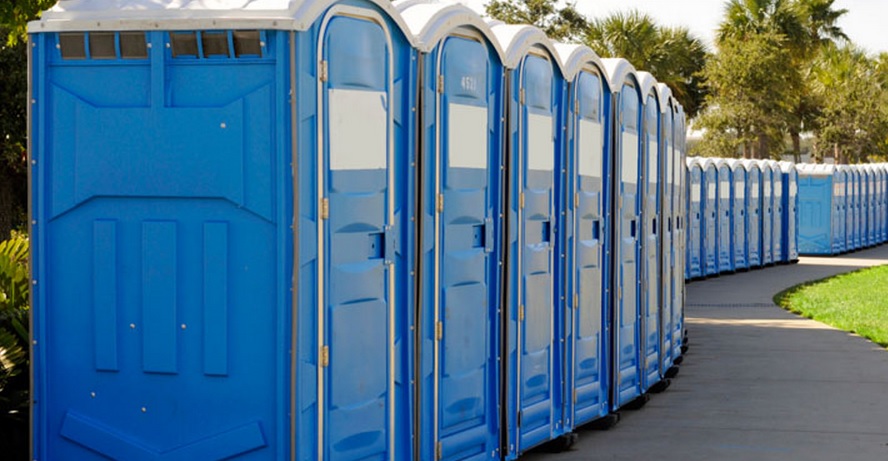
Advantages and disadvantages of mobile toilets and traditional public toilets
1. Advantages and disadvantages of mobile toilets
advantage:
① It can be moved anytime and anywhere, which is very convenient. It can solve the physiological problems of travelers well, and at the same time avoid the waste of resources caused by demolition.
② The cost of mobile toilets is relatively cheap, and the quality is good, the service life is long, and the economic benefits are high.
③ The appearance of the mobile toilet is more beautiful and can be coordinated with nearby buildings. The integrity design of its structure makes it have more distinctive features, helping the city to obtain more potential environmental beautification.
④ Compared with traditional public toilets, mobile toilets can reduce the waste of resources. For example, compared with traditional public toilets, mobile toilets save at least 80% of water resources.
shortcoming:
① The deodorization technology is immature. Methods such as spraying air fresheners can remove odors through evolution and dilution, but this cannot fundamentally solve the problem.
② Water-free packaged mobile toilets have high cleaning and transportation costs, and the working environment is poor. During the cleaning and transportation process, excrement is likely to leak and cause secondary pollution, and some packaging materials are not easy to degrade
③ Circulating water-flush mobile toilets require high operating requirements, high power consumption, low degree of reduction, and incomplete sterilization. In order to reduce odor, regular and timely sewage and replenishment of clean water are required. There is a tendency to accumulate pollutants. When the number of people is overloaded The effect of biological treatment is poor.
2. Advantages and disadvantages of traditional public toilets
advantage:
① It is a fixed place with large capacity, which can solve the physiological problems of most travelers in the area. The space is large and can make people feel more comfortable.
② The construction of traditional public toilets is mainly constructed by the government and entrusted private companies. The construction materials used are better than those of mobile toilets, and there are also specialized personnel for cleaning and management.
③ Traditional public toilets are built with masonry concrete, which will be stronger and will not be blown over by extreme weather.
shortcoming:
① Traditional septic tank toilets commonly used in traditional public toilets not only require excrement pumping and cleaning, but also consume a lot of water.
② The construction period is relatively large, and the physiological needs of travelers in this area cannot be solved in a short period of time
③ Poor hygienic environment. Due to aging facilities and untimely cleaning of traditional public toilets, the hygienic environment is poor, and bacteria are easy to breed, which affects the health of tourists.
④ The equipment is old and the facilities are not perfect. The equipment of traditional public toilets is old, such as faucets and sinks, which are inconvenient to use and affect the experience of tourists. The facilities are not perfect, such as no paper towels, hand sanitizer, etc., which cannot meet the basic needs of tourists, and are not hygienic enough.
⑤ Lack of information management. Traditional public toilets lack information management means, making it difficult to conduct statistics, analysis and forecasts, and cannot effectively manage and maintain public toilets
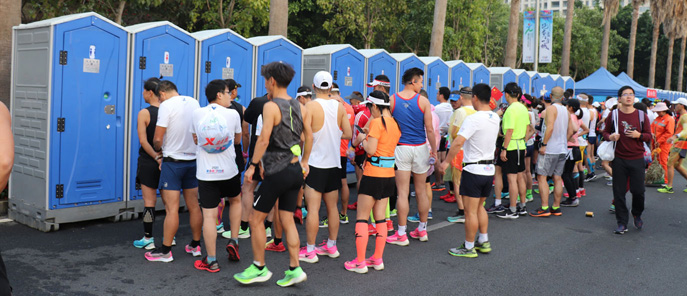
The use of mobile toilets and traditional public toilets
Mobile toilets are usually widely used in various public places, tourist attractions, seashores, communities, conference venues, exhibitions, highways, parking lots, underground projects, schools, military, sports fields, golf courses, construction sites, etc. Traditional public toilets are usually suitable for cities and public places, and are generally places with a large flow of people, such as parks, shopping malls, restaurants, etc. They are usually free and have a fixed location.
Cleaning methods of mobile toilets and traditional public toilets
The cleaning method of traditional public toilets is usually cleaned by professionals to ensure hygiene. If you have any problems using the public restrooms, please report them to management. Cleaning methods for portable toilets vary by make and model. You can use disinfecting wipes or other cleaners to clean a portable toilet.
The above is the difference between mobile toilets and traditional toilets. Generally speaking, the advantages of mobile toilets outweigh the disadvantages. I believe that in the near future, the shortcomings of mobile toilets can be resolved.
FAQs
Q1: How to choose a portable toilet?
You can compare and choose the best portable toilet based on capacity, quality, weight, cleaning method and price.
Q2: How often do mobile toilets need to be cleaned?
It depends on the frequency of use. If you use it a lot, then you need to clean the toilet more often.
Q3: What types of mobile toilets are there?
The main types of mobile toilets are water-free packaging type, ordinary water flushing type, foam blocking type, microbial degradation type, etc.
DM-Toilet-西语
Nombre*
*País*
*Correo electrónico*
*Teléfono/Whatsapp*
*Mensaje*
*


