
How do I choose the right number of portable toilets for my event?
Now more and more large-scale activities will use portable toilets. The convenience and environmental protection of mobile toilets can solve the problem of toilets in large-scale activities. There are some points that need to be paid attention to when using portable toilets in large-scale events. Let's first understand the portable toilets and how they work, and some precautions on how to choose the right number.
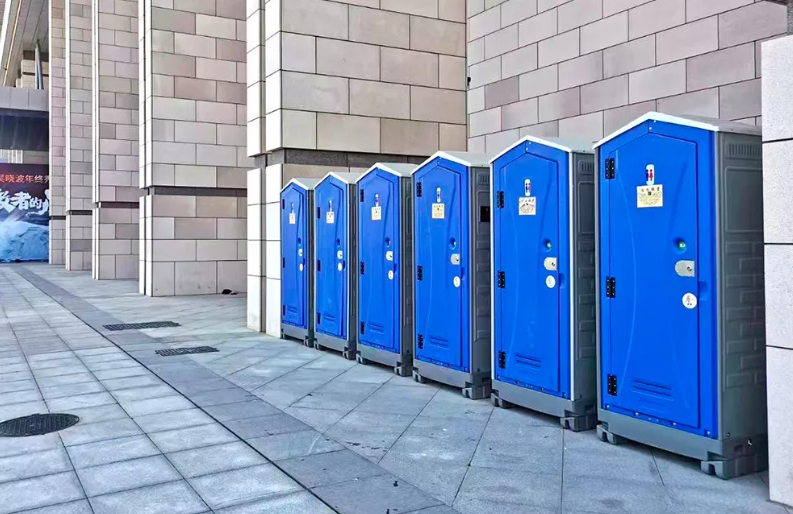
Portable Toilet Introduction
Portable toilets are named for their mobility, which is opposite to traditional fixed toilets. Compared with traditional toilets, the advantages are very obvious. The mobile toilet is not restricted by any working environment and is suitable for any activity scene. It has a light structure and reasonable color matching.
How Portable Toilets Work
The portable toilet has many working principles. It has seven sewage treatment methods, including traditional flushing and new environmentally friendly forms. For example, the water-free packaging type uses a packaging bag made of biodegradable biofilm to pack the excrement excreted by the human body, and then store it in the lower stool box, and perform consistent treatment when it is almost full. The other is the foam blocking type, which uses foam to replace water flushing. In fact, a small amount of water is used to prepare foaming liquid, and foam is generated in the urinal through the foaming system, and the foam is used to flush the toilet and remove stink. These two are the most used sewage treatment methods. If you want to know about other methods, you can contact Dream Maker and we will answer for you.
The quantity can be determined according to the spacing
According to the type, area, number of tourists, road conditions, age percentage of tourists, average speed and other factors, the distance of the mobile toilet is between 300m-800m, among which: the distance between the ancient town with a large flow of people and other scenic spots: 300-500m is appropriate; The distance between the restrooms of less-crowded scenic routes and other routes: 500-800 m is appropriate. The public toilets in scenic spots must be evenly distributed in the functional area of the tourist area, the spacing should be between 200-500 m, and the service radius should not exceed 500 m. The distance between public toilets on busy main streets should be 300-500m, the distance between densely populated streets should be less than 300m, and the distance between street-facing public toilets should be 750-1000m; the distance between public toilets in old communities should be 100-150m, and that in new communities should be 300-500m.
The quantity can be determined according to the number of people
Generally, the number of portable toilets is selected according to the number of people. Generally, an average of 300 people needs to have a portable toilet, so that the number of mobile toilets that need to be used can be directly calculated, which is generally higher than this number, but not lower than this number. Of course, this number is for some large-scale events, usually more than 5,000 people. If there are hundreds of people, then order a few more. Another example is on the streets of the city, the mobile toilet is generally two compartments. Because there are more toilets in the city, there is no need to set up too many toilets. Two is enough. But there will be four at some large intersections, and more will be restricted by the surrounding environment. If it is some large-scale outdoor activities, mobile toilets will be rented, and the number of toilets will be more.
Placement
The first choice of placement is at the entrance of the event. This location is not only clearly placed but also there will be no congestion in the later stage. If there are many people at the event site, they can be placed separately or even more, such as at the entrance, exit and other suitable places.
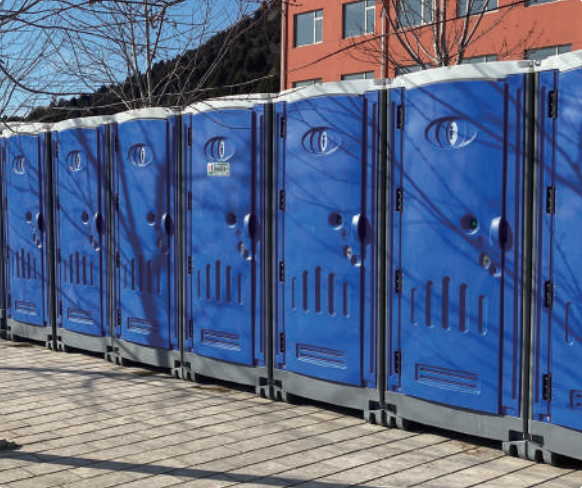
The layout of the portable toilet should not obstruct the view, and at the same time must be easy to find, emphasizing convenience and accessibility. Therefore, they must be evenly distributed in the functional area of the activity area, with a suitable distance, and there should be clear signs to show tourists. In this way, you can choose the right number of portable toilets. I hope this article can help you. For more information, please follow us.
FAQs
Q1: Is there any relationship between user experience and the number of toilets?
There is a direct relationship. The purpose of portable toilets is to enable more people to use them and reduce the crowding of queues. If the number is small, it will cause queues.
Q2: What are the material requirements for portable toilets?
If there are a large number of toilets, it is recommended to use plastic or metal portable toilets
Q3: Will there be styling requirements if there are too many portable toilets?
There are certain requirements, and a large quantity will have a certain impact on the shape, such as the size of the capacity, whether the appearance design is beautiful, etc.
Q4: Are portable toilets environmentally friendly?
Portable toilets are an eco-friendly alternative to traditional toilets that not only use recycled materials but also use less water.
DM-Toilet-西语
Nombre*
*País*
*Correo electrónico*
*Teléfono/Whatsapp*
*Mensaje*
*


